Wednesday, October 3, 2018

Assignment #4: Line, Space, Shape & Shadow


Assignment #4: Line, Space, Shape & Shadow


Michaël Luitaud


Essential question: How can I use the art elements of: Line, Space, Shape & Shadow to create interesting photographs with good contrast and composition?

You will take photos, trying to capture: Line, Space, Shape & Shadow in interesting ways. You must post your best photos to your blog AND write a reflection following the instructions on this blog post and you must have at least 3 photo examples in black and white of each category (Line, Space, Shape & Shadow) posted to your blog in order to receive full credit! 

NO GOOGLE PHOTOS!!!

Look for photo opportunities that already exist, but at the same time, be ready to stage photos if you get an idea that fits the assignment.


I will:


Take interesting photos of line, shape, and space in black and white.

Post all of my photos to my Blog with the write-ups. 


I will: 


Create a new blog post with the following:

3 examples of each category with each photo labeled with the appropriate category (line, shape, space, shadow)


I will:


Write at least a paragraph reflection on:


1) What are some ways your photography skills have improved over the past few assignments?

2) What are some things you struggle with in photo?

3)Which of the elements you photographed (line, shape, space, shadow) was the easiest for you? Why?

4) Which of the elements you photographed (line, shape, space, shadow) was the most difficult for you? Why?

5) Tell me what you feel you've learned from this particular project.

6) Is there a photograph or photographer we have looked at that inspires you?

Examples:


Line

line-476935 line-Leading-Line line-High-Speed-Rail-Tokyo-500x330 line-End-of-the-lineVCTFH0001

Shape

shape-creating-heart-shape-on-a-book-with-a-ring-photography-trick shape-geometric7-1-of-1 shape-grapes-multi-color

Space

Through the keyhole space_fence
space_beatrice_small ruined_doorway_small

Shadow


Michaël Luitaud


Michaël Luitaud


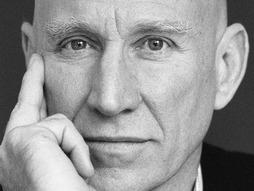
Artist Bio : Sebastião Salgado

© Sebastião Salgado

Economics PhD Sebastião Salgado only took up photography in his 30's, but the discipline became an obsession. His years-long projects beautifully capture the human side of a global story that all too often involves death, destruction or decay. Here, he tells a deeply personal story of the craft that nearly killed him, and shows breathtaking images from his latest work, Genesis, which documents the world's forgotten people and places.

Students do a daily "Bell Work" activity analyzing a significant or historical photo. They must make written comments about the composition, contrast, focus, balance, framing and statements each photo or artist is making. This is our daily warm up exercise. We also watched a video on Ted Talks by this iconic modern photographer.

Interactive transcript


Sebastião Salgado
Photojournalist
Full bio

Friday, September 28, 2018

Daily Photo #7

The Soiling of Old Glory : Stanley Forman

The Soiling of Old Glory is a Pulitzer Prize–winning photograph taken for the Boston Herald American in 1976 by Stanley Forman.[1]The photograph depicts a white teenager, Joseph Rakes, assaulting a black man, lawyer and civil rights activist Ted Landsmark, with a flagpole bearing the American flag as Landsmark was on his way to a meeting in the courthouse. Landsmark was active in trying to get more minority contractors in the construction industry, but he hadn't been paying attention to the busing protests. [2] According to Landsmark, "I had difficulty finding a parking space in downtown Boston, and I was running a few minutes late for the meeting in city hall. So I was in a hurry and perhaps not paying as much attention as I might have as I approached a corner, where the young demonstrators were coming in the other direction. I did not see them until both they and I were at that corner." [3]It was taken in Boston on April 5, 1976, during one in a series of protests against court-ordered desegregation busing.[1] It ran on the front page of the Herald American the next day, and also appeared in several newspapers across the country.[1] It won the 1977 Pulitzer Prize for Spot Photography.[4]Rakes was swinging the flag and trying to hit him, not trying to spear him as it appears in the photo, and he narrowly missed. Landsmark was bloodied during the incident.[5] An examination of all the photographs in the roll Forman shot reveals that Rakes missed Landsmark with the flag. Although anti-busing activist Jim Kelly appears to pin Landsmark's arms behind him, he is actually helping Landsmark to his feet. Kelly later positions himself between Landsmark and the other protestors to protect the lawyer. Landsmark had already been knocked to the ground, losing his glasses and suffering a broken nose, by the time he got up the famous picture was taken.[6]Rakes was convicted of assault with a deadly weapon and sentenced to two years imprisonment and two years probation. The jail sentence was suspended. In 1983 the Boston police issued a warrant alleging that Rakes had beaten to death the brother of his girlfriend.[7] He fled prosecution, but returned in 1988 after the murder charge was dropped.[8] Rakes carried the stigma of being known as "the flag kid", but eventually turned his life around, getting married and having a family while laboring as a construction worker and later in hazardous waste.[6] (Wikipedia)


Video #1
Video #2
Video #3


Students do a daily "Bell Work" activity analyzing a significant or historical photo. They must make written comments about the composition, contrast, focus, balance, framing and statements each photo is making. This is our daily warm up exercise.We also watched a 3 videos on YouTube about the historic situation that led to this photo being chosen for the 1977 Pulitzer Prize for Photography . This photo summarized the time period and was one of the more iconic photos of it's time. 

Thursday, September 27, 2018

Daily Photo #6


Robert H. Jackson : Jack Ruby shooting Lee Harvey Oswald 


Robert H. Jackson (photographer) Robert H. Jackson's prize-winning photograph of Jack Ruby shooting Lee Harvey Oswald. Robert "Bob" Hill Jackson (born April 8, 1934) is an American photographer.
On November 24, 1963, two days after Lee Harvey Oswald was arrested for the assassination of President John F. Kennedy, he was about to be transferred police headquarters to the nearby county jail. Oswald was handcuffed to Dallas detective Jim Leavelle. At 11:21 am, stepping out from a crowd of reporters and photographers, a nightclub owner Jack Ruby fired a Colt Cobra .38 into Oswald’s abdomen on a nationally televised live broadcast.
His motives for killing Oswald were not clear. There is some evidence it was on a whim, for Ruby left his dog, Sheba, in the car. He told that he helped the city of Dallas “redeem” itself in the eyes of the public, that Oswald’s death would spare Jackie Kennedy the ordeal of appearing at Oswald’s trial and that he avenged Kennedy. Ruby was convicted of Oswald’s murder and died in prison.
Although hundreds of cameras and news reels captured the moment, the most famous image of Ruby’s killing was made by the Dallas Times-Herald reporter, Robert H. Jackson. He won the 1964 Pulitzer Prize for Photography for the above photo, which showed “the hunched determination of the assassin, the painful gasp of the handcuffed victim, and the shock of helplessness on the face of a policeman”.
Bob Jackson had missed the President’s assassination earlier; he had been riding with Kennedy’s motorcars, but he was changing film and giving it to his editor when shots rang out. He had the dubious honor of being the only photographer in the press corps to miss the assassination. Two days later he went to the Dallas police headquarters. He remembers the fateful day:
“I walked right in. There was no security to speak of. Nobody checked my press pass. I had seen Ruby once. He came up to the photo department at the paper and brought one of his strippers. That day there was a feeling in the air that something could happen. When Oswald came out the door, I raised my camera to my eye. I was ready. We stood in a semicircle about eleven feet in front of the door which formed a little clearing. People yelled out, ‘Here he comes.’ As I looked through the camera, Oswald took eight or ten steps, and I saw a body moving into my line of sight. I leaned over the car to the left, Ruby moved three quick steps and bang. When he shot, I shot.”
Jackson’s contact sheets were displayed about a decade ago at Art and Photographs Gallery in London, England.

Tuesday, September 25, 2018

Assignment #3: Vantage Points


Essential Question: How can I create a variety of different photos of the same subject using different vantage points and perspectives? 


On your own choose a "Prop" (object) as your subject and photograph only that subject from a variety of vantage points, perspectives and angles. You can also experiment with different backgrounds and lighting. 


How can we as photographers, frame images that tell an intriguing story?


Create a new blog post with the following:

1) A birds eye view

2) A worms eye view

3) A closeup shot 

4) A wide shot 

5) An extreme closeup 

6) A long shot

7) A medium shot

Choose the best photos you took using your prop for each category and post them to your blog along with a few sentences describing what you learned from this exercise about vantage points, angels and perspectives in photography. 


Daily Photo #6


Stanley Forman : Fire Escape

1976 Pulitzer Prize Winning Photo: On July 22, 1975 in Boston, a 19-year-old and her 2-year-old goddaughter were trapped in a burning building. A firefighter, Robert O’Neill, shielded them from the flames as a fire ladder inched closer. Then the fire escape collapsed. Although the woman died from her injuries, the infant survived. Fire Escape Collapse circulated around the world. The photo led to the passage of new fire escape legislation across the country. It provided Stanley Forman with his first of two Pulitzer Prizes for spot news photography. 


We also watched a 2 videos on YouTube about the historic situation that led to this photo being chosen for the 1976 Pulitzer Prize for Photography and the controversy over sensationalism in photo journalism and ethics in photography. This photo was controversial in it's day and fostered serious discussion and was one of the more iconic photos of it's time. 


Students do a daily "Bell Work" activity analyzing a significant or historical photo. They must make written comments about the composition, contrast, focus, balance, framing and statements each photo is making. This is our daily warm up exercise.


Video #1
Video #2


Friday, September 21, 2018

History of Photography

Camera Obscura 1553

  Students will take a full page of notes in class and transfer to their blogs about the History of Photography and post it along with 3 Art Historical images associated with the History of Photography. You may find images and information from the Web and our Videos.


  Video #1 

  Video #2 

  Video #3